Antiquary & Expert CNES
"Treasures of yesteryear imbued with history"
Place Fleury, Beaune - Burgundy, France
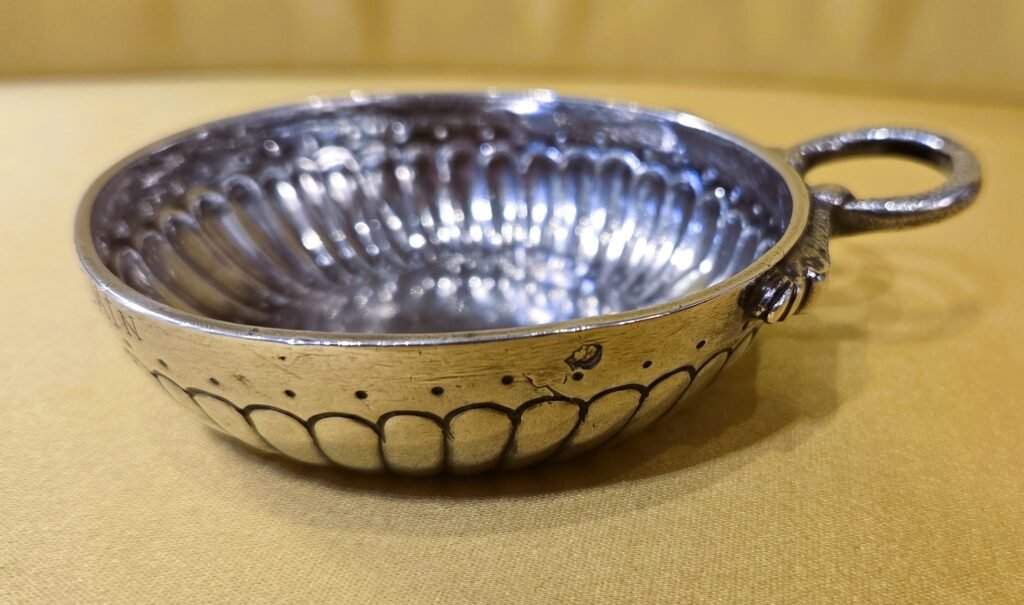
18th century silver wine taster
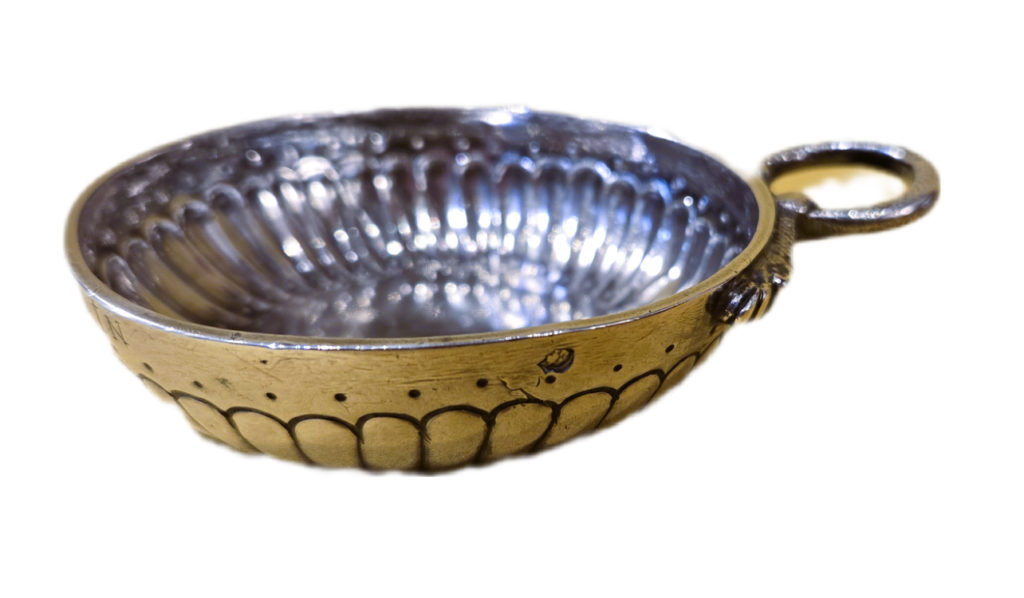
Origin: Paris, France Period: Louis XV (18th century) Year: 1756
Technical Specifications
- Material: Sterling silver
- Goldsmith: Alexandre DE ROUSSY (received in 1728)
- Weight: 89 grams
- Dimensions: Diameter 8.6 cm | Maximum height 2.4 cm | Length with handle 11.2 cm
Stylistic Details & Hallmarks
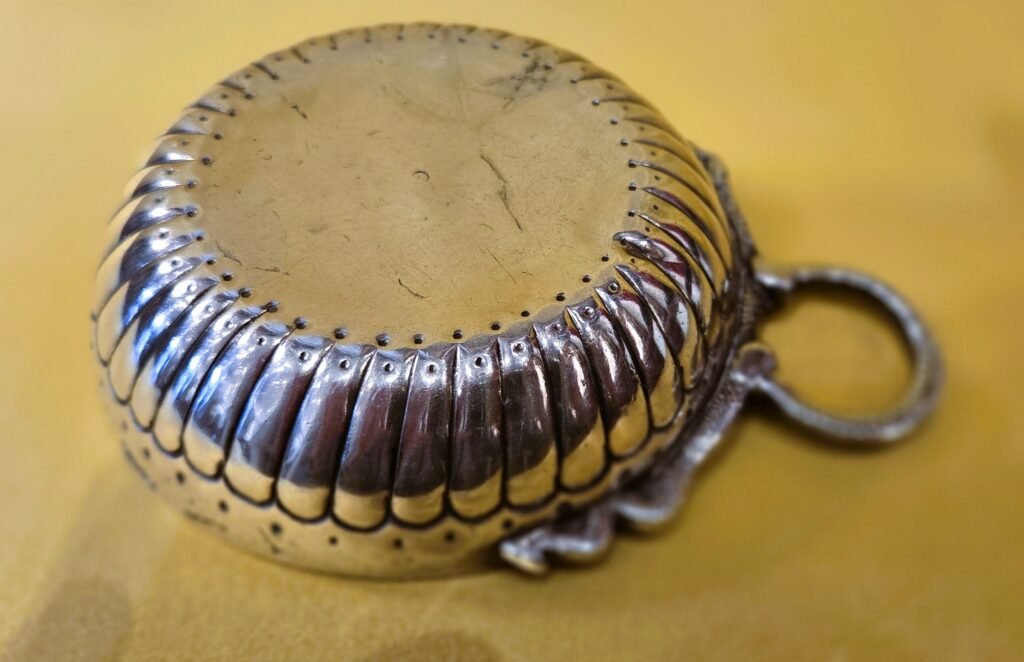
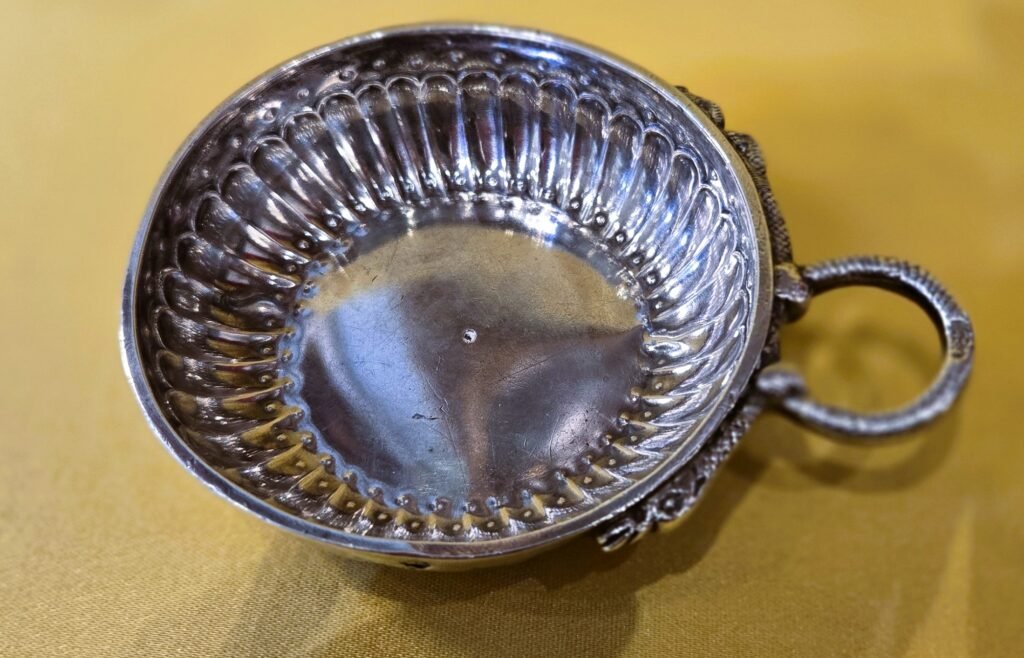
- Pattern: Decoration with radiating ribs highlighted by dots.
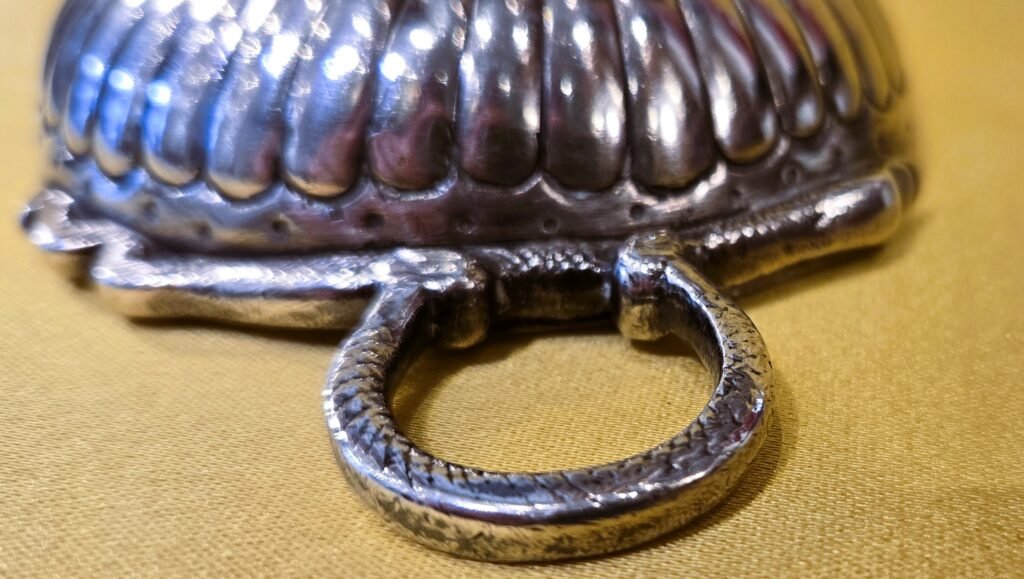
- Handle: Serpentine pattern (in the shape of an intertwined snake).
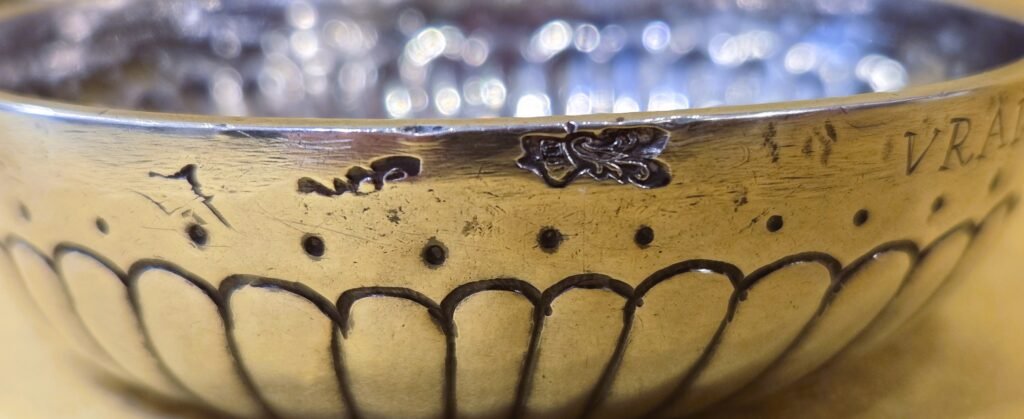
- Engraving: Border engraved with the name "VRAIN E VILLAIN".
- State hallmarks: * Loading and unloading hallmark for Paris (1756-1762).
- Town Hall (Jurande) hallmark for Paris, letter-date 1756.
- Goldsmith's hallmark (body and handle):
- Alexandre DE ROUSSY. Master Craftsman: Received the title of "Master" in Paris on July 21, 1728. Historical
Context: He worked during the reign of Louis XV, a pivotal period when French goldsmithing reached a peak of technical refinement. Wine-tasting cups from this era are often more robust and distinctive than later 19th-century models.
Style: The fluted decoration with dotted lines is typical of the mid-18th century. The serpentine handle is a classic feature of Burgundian and Parisian goldsmithing, often symbolizing vigilance or simply Baroque elegance.
Signature: The engraving "VRAIN E VILLAIN" on the rim likely indicates the name of the original owner. At the time, the wine-tasting cup was a precious personal item, often carried on one's person (sometimes on the belt or in a pocket).
Why is this piece interesting?
Complete traceability: Thanks to the guild mark (date letter) and the charge/discharge mark, we have a precise year (1756) and city (Paris), which is the holy grail for collectors.
State of preservation: In the photos, the reliefs (the ribs and dots) still appear quite sharp, suggesting that the object has not been overly polished over the centuries.
Unity: The fact that the maker's mark is present on both the body and the handle guarantees that the piece is original and has not undergone any composite repair (soldering of a more recent handle).