Antiquary & Expert CNES
"Treasures of yesteryear imbued with history"
Place Fleury, Beaune - Burgundy, France
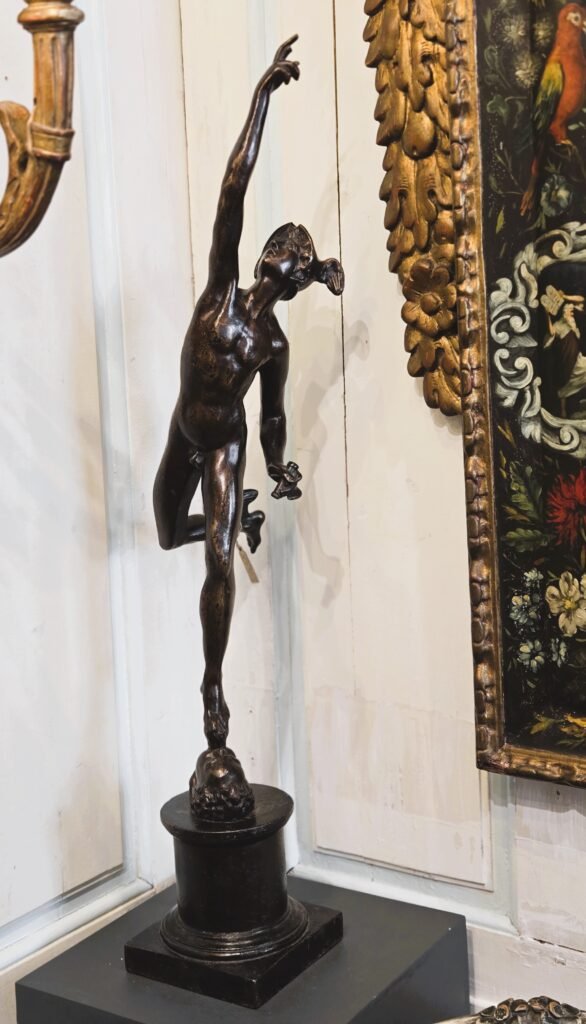
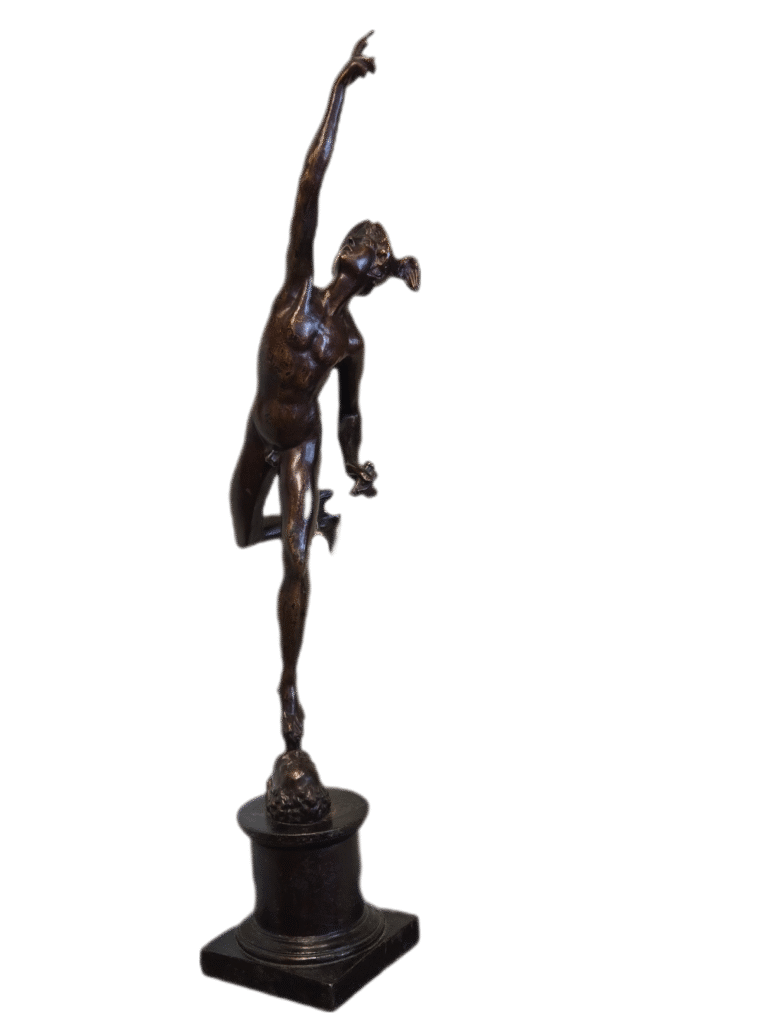
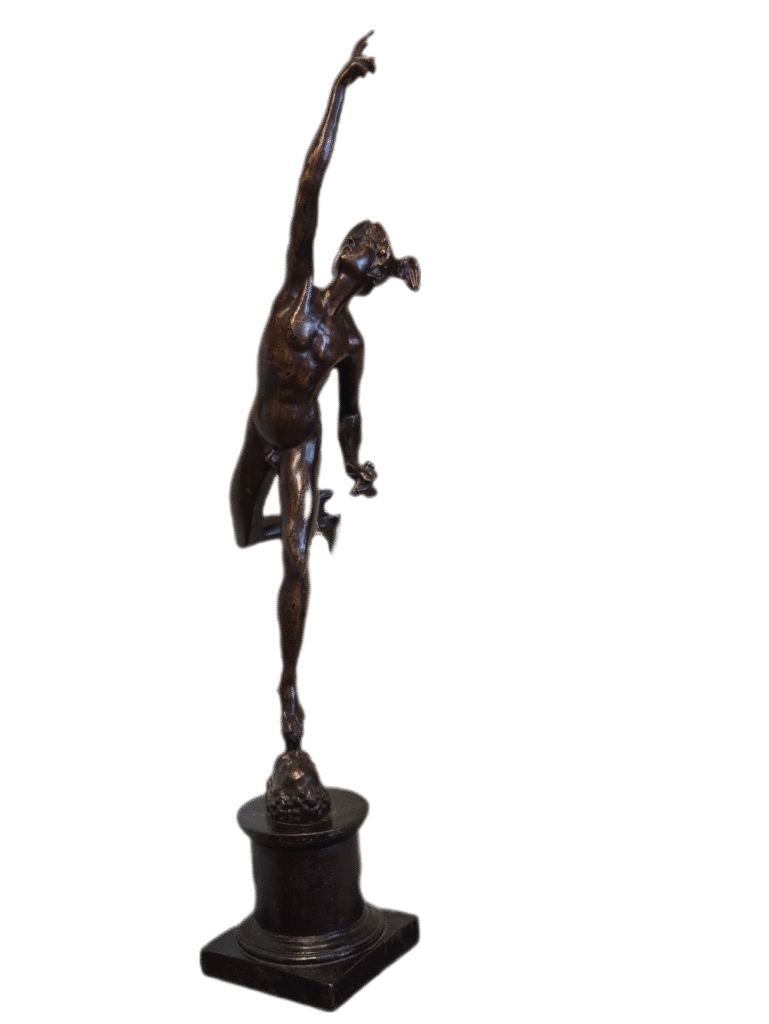
Flying Mercury after Jean de Bologne
- Period: 11th century
- Origin: France or Italy
- Dimensions: 82cm Example: 19th century
- Price: 3500 euros
This striking sculpture depicts Mercury (Hermes), the messenger of the gods in Greco-Roman mythology, captured in mid-air. Inspired by Giambologna's models, the work evokes the famous "Flying Mercury," an emblematic figure of the Renaissance, frequently reproduced in the 18th and 19th centuries.
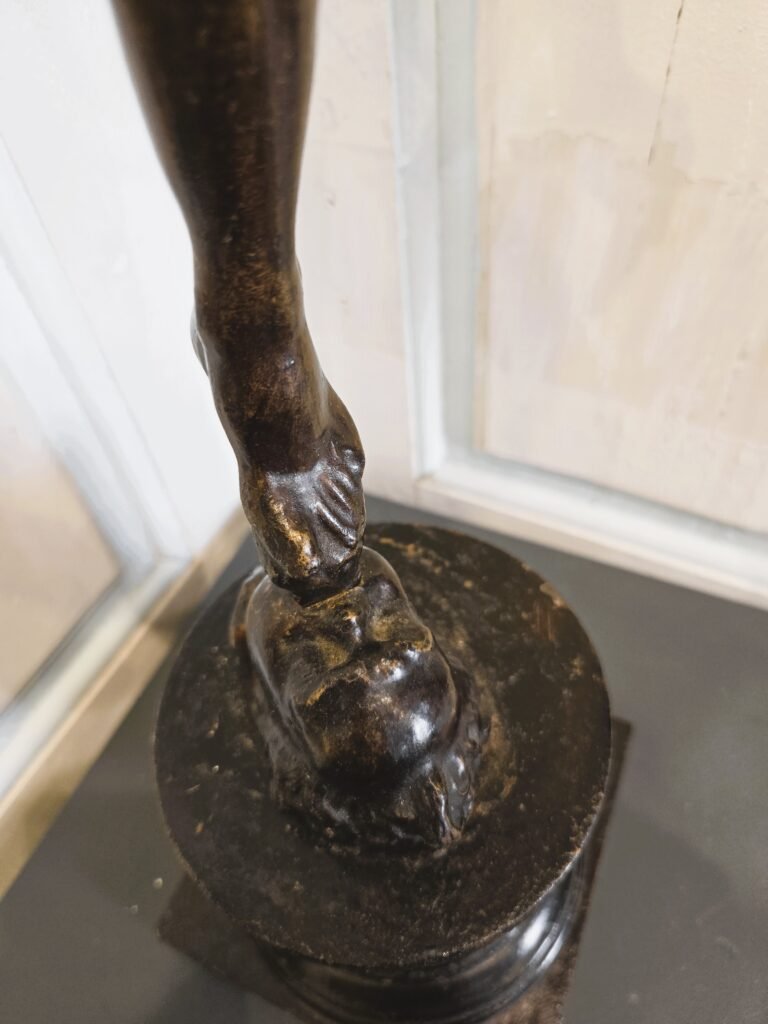
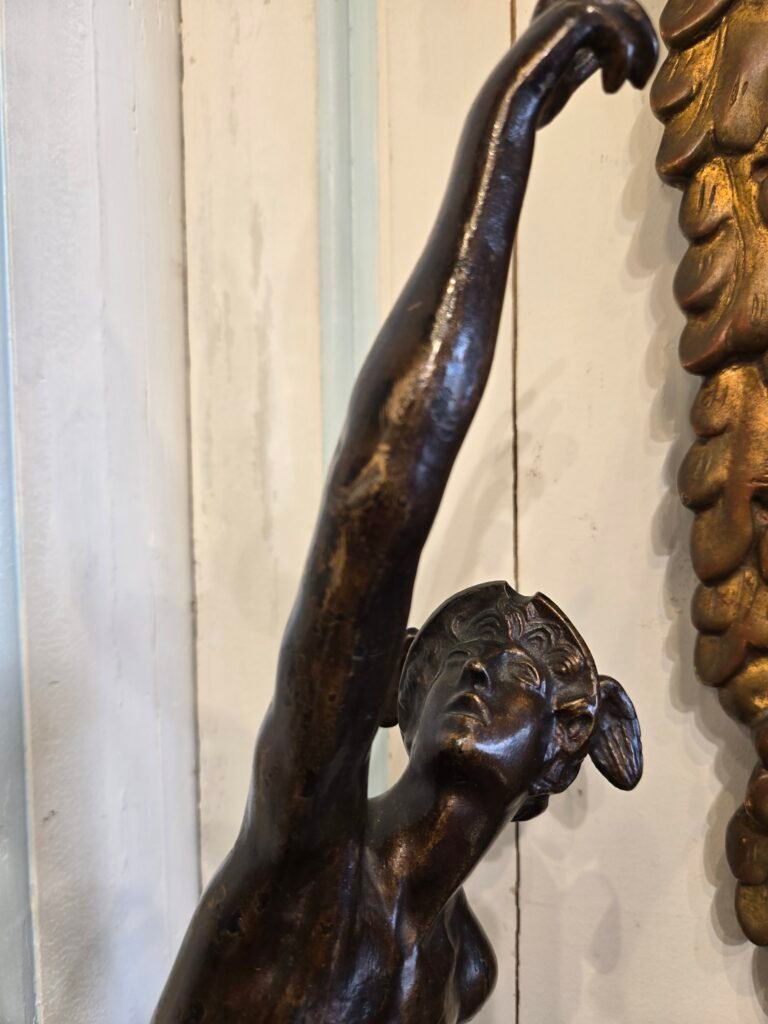
The god is depicted naked, slender, with his arm outstretched towards the sky, resting on one foot supported by a stylized breath of air emanating from a blowing head (often identified with Zephyr or Aeolus), a symbol of divine lightness. His characteristic wings (petasuses) are found on his helmet, as well as on his ankles – traditional attributes of Mercury.
Made of cast iron, this version is distinguished by its slender proportions (82 cm high with base), its precise casting quality, and its original deep brown patina. The molded circular base, also in cast iron, harmoniously complements the sculpture and reinforces its verticality.
Beautiful antique patina, signs of wear from use, some missing parts.
Origin: France or Italy
This type of sculpture traditionally adorned libraries, vestibules, or collectors' studies, and reflected the scholarly taste for mythological figures. The quality of the modeling and the finesse of the casting make it not only a decorative work but also evocative of the 19th-century neoclassical spirit.