Antiquary & Expert CNES
"Treasures of yesteryear imbued with history"
Place Fleury, Beaune - Burgundy, France
Late 17th century glass wine bottle
- Era: 1690-1720
- Origin: England or the Netherlands
- Dimensions: 20cm
- Price: 480 euros
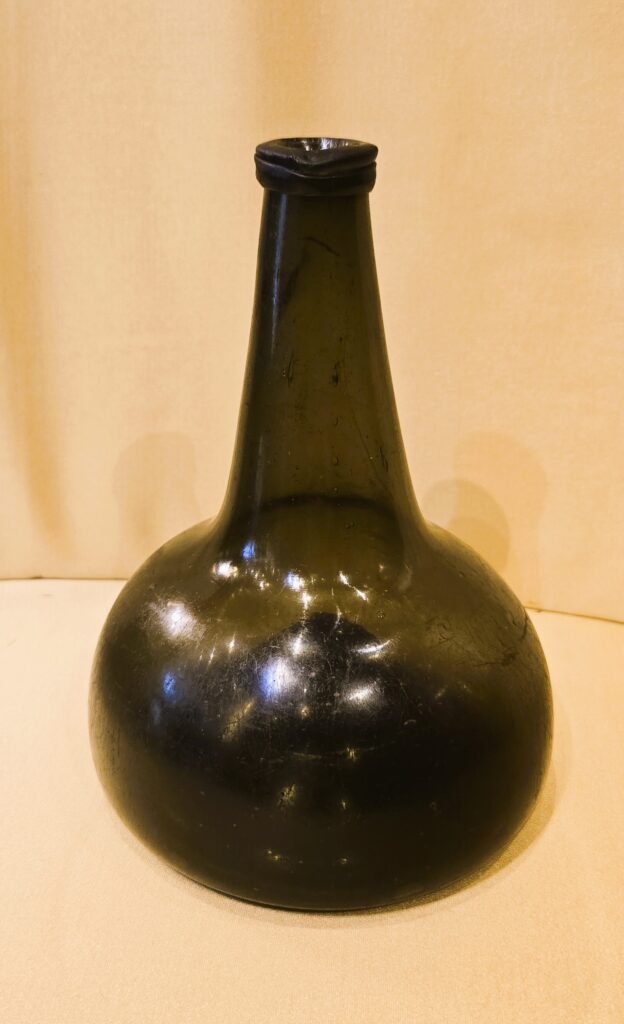
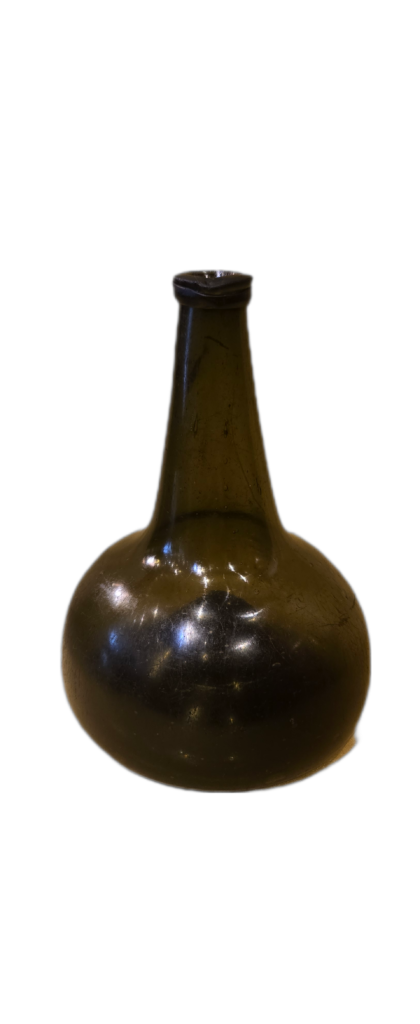
This magnificent "onion" bottle is typical of the late 17th or very early 18th century.
It is called "onion" because of its very bulbous body and wide neck. It is the direct evolution of the earlier "globular" bottles.
Its shape, with a body slightly wider than it is tall and a neck that begins to lengthen, suggests a manufacture between 1690 and 1720 .
At that time, wine was stored upright or served at the table. The wide base ensured excellent stability on tavern tables or ships' decks.
A glass ring can be seen crudely applied just below the rim. Originally, this ring was used to attach the cork stopper with string or wire, as the pressure of the wine (or beer) could expel it.
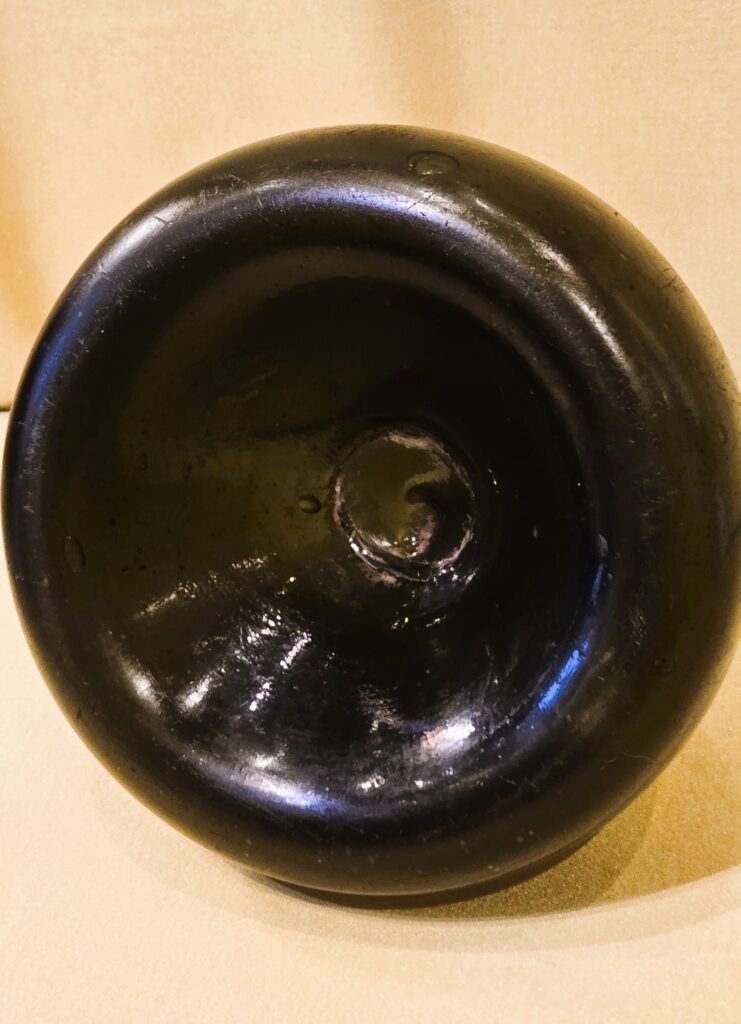
The view from below shows a rough, circular scar in the center of the "puncture" (the indentation under the bottle). This is the mark left by the iron rod (the pontil) used by the glassmaker to hold the bottle warm while finishing the neck. This proves that the glass was mouth-blown without a mold .
Its pear-shaped form, derived from the so-called “onion” models, features a generous belly and a slender neck, marking the evolution towards more vertical silhouettes at the end of the period.
The glass, very dark – almost black – was specially designed to protect the wine from light. It displays the typical characteristics of handcrafted work: bubbles, slight deformations, and variations in thickness.
The base retains a clear and visible pontil mark , an indisputable signature of mouth-blown production.
The lip, shaped while hot without any additives, reinforces the authenticity of the piece.
Simple and elegant, this bottle is a beautiful collector's item, but also a strong decorative element, alone or in a collection.