Antiquary & Expert CNES
"Treasures of yesteryear imbued with history"
Place Fleury, Beaune - Burgundy, France
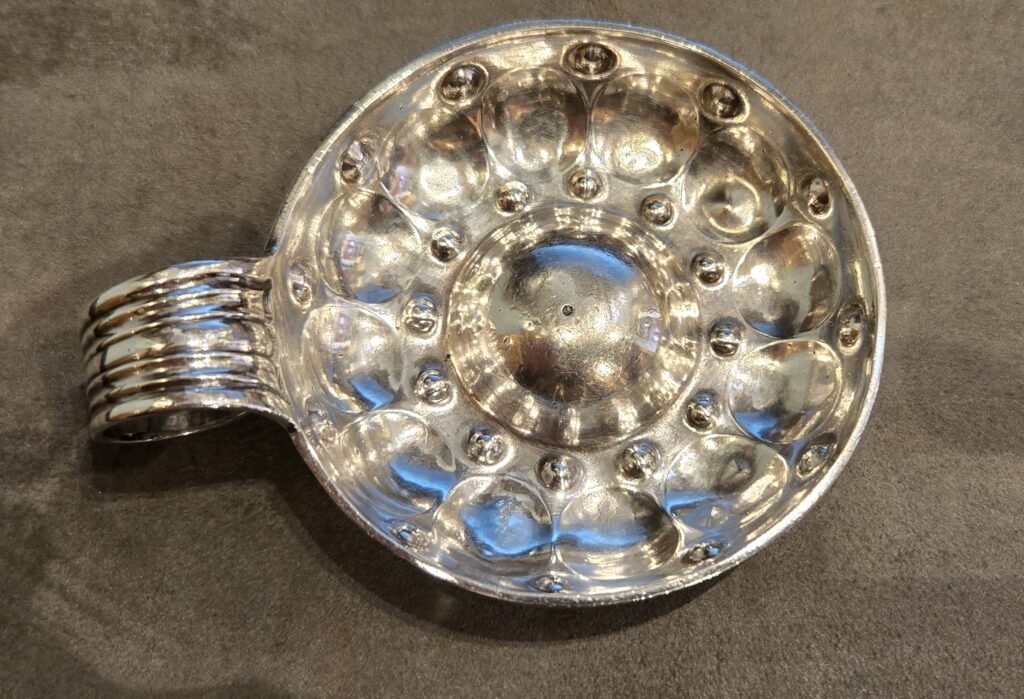
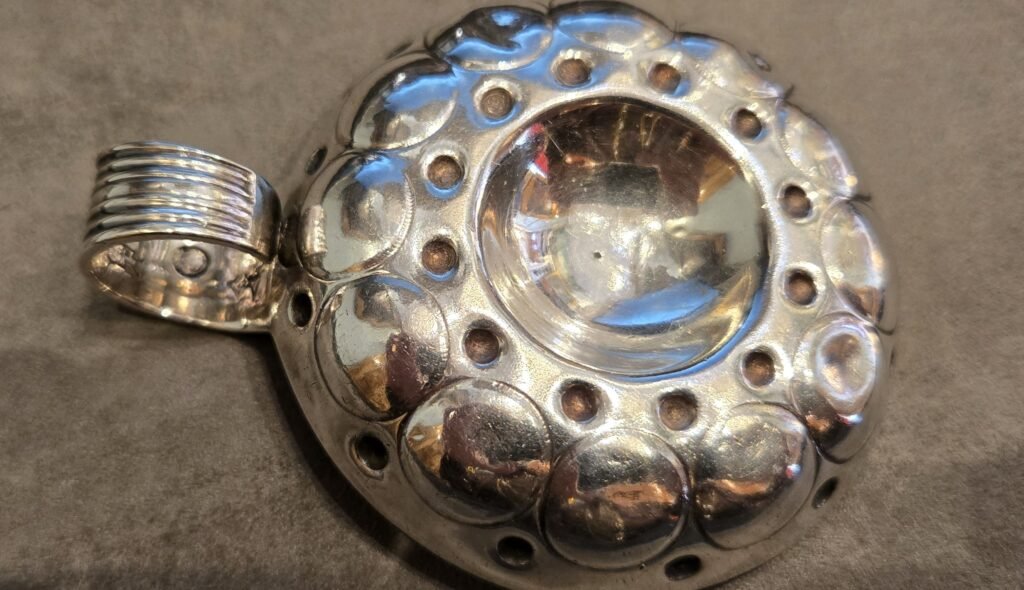
Wine taster during the revolutionary period
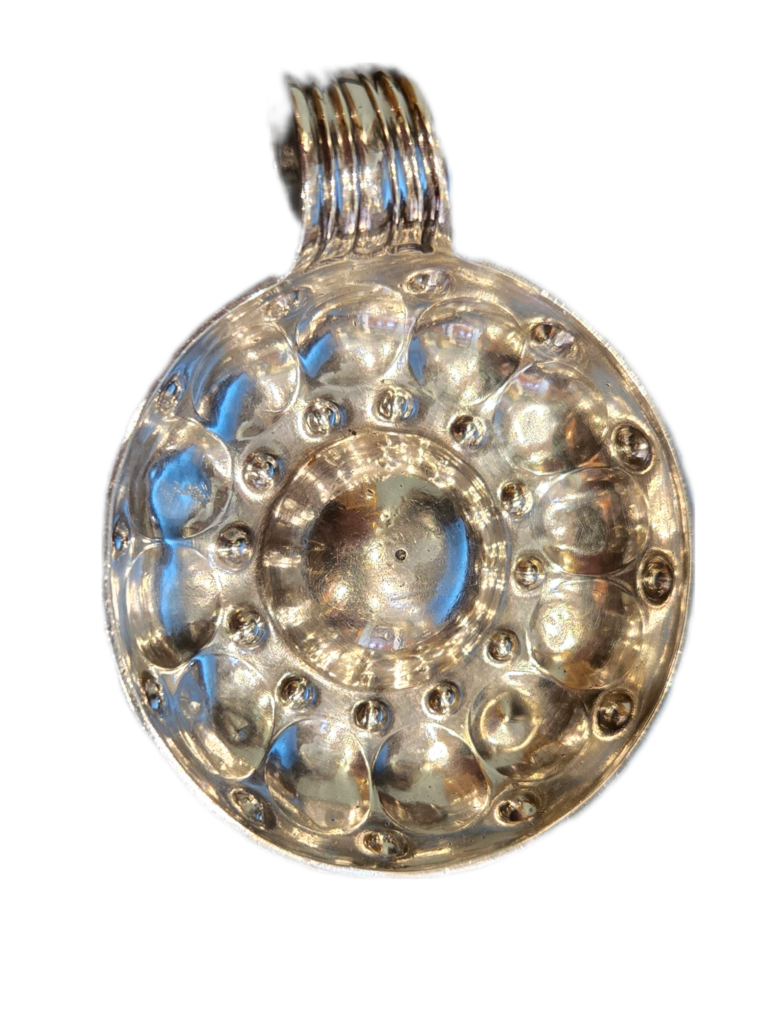
- Period: French Revolution
- Origin: Paris
- Dimensions: 9cm diameter
- Price: 750 euros
1. General Description
- Subject: Wine taster (or wine taster).
- Origin: Paris, France.
- Period: 1789-1792 (French Revolution period / Late Louis XVI style).
- Goldsmith: Pierre-Antoine Famechon (Received Master in Paris in 1785).
2. Technical Specifications
- Material: Solid silver.
- Weight: approximately 50 grams.
- Dimensions: Diameter of 9 cm.
- Decoration: Background decorated with cupules (repoussé circular coffers) and of points (pearls), a classic arrangement to facilitate the examination of the color and clarity of the wine.
- Handle: Model with "reversed handle", typical of the 18th century.
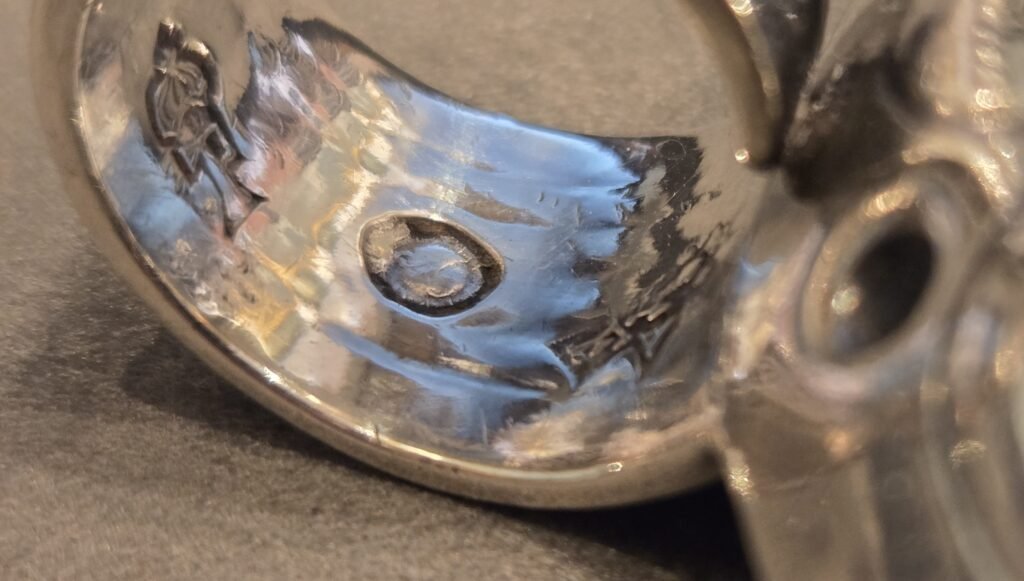
3. Punches
On a Parisian coin from this transitional period (1789-1792), one generally finds:
- Goldsmith's hallmark: The initials PAF with a symbol (often a small heart or a grain of medicine) and a crown, in a lozenge.
- Stamp mark: The crowned letter A (for Paris). Note that in 1791, the old stamps of the General Farm were discontinued.
- Town Hall hallmark (Date): A crowned date letter (ex: P for 1789).
- Discharge Punch
Historical note: Pierre-Antoine Famechon was a renowned goldsmith of the late 18th century. His admission to the guild in 1785 placed him at the heart of the Parisian artisan elite just before the legislative upheavals concerning precious metals in 1791.
4. State and Contextual Value
- Collector's interest: Very high. Pieces from this "pivotal period" (1789-1792) are particularly sought after as they mark the end of Old Regime goldsmithing.
- Functionality: The cup-shaped decoration is not only aesthetic; it creates reflections in the wine to judge its clarity, even in a dark cellar.