Antiquary & Expert CNES
"Treasures of yesteryear imbued with history"
Place Fleury, Beaune - Burgundy, France
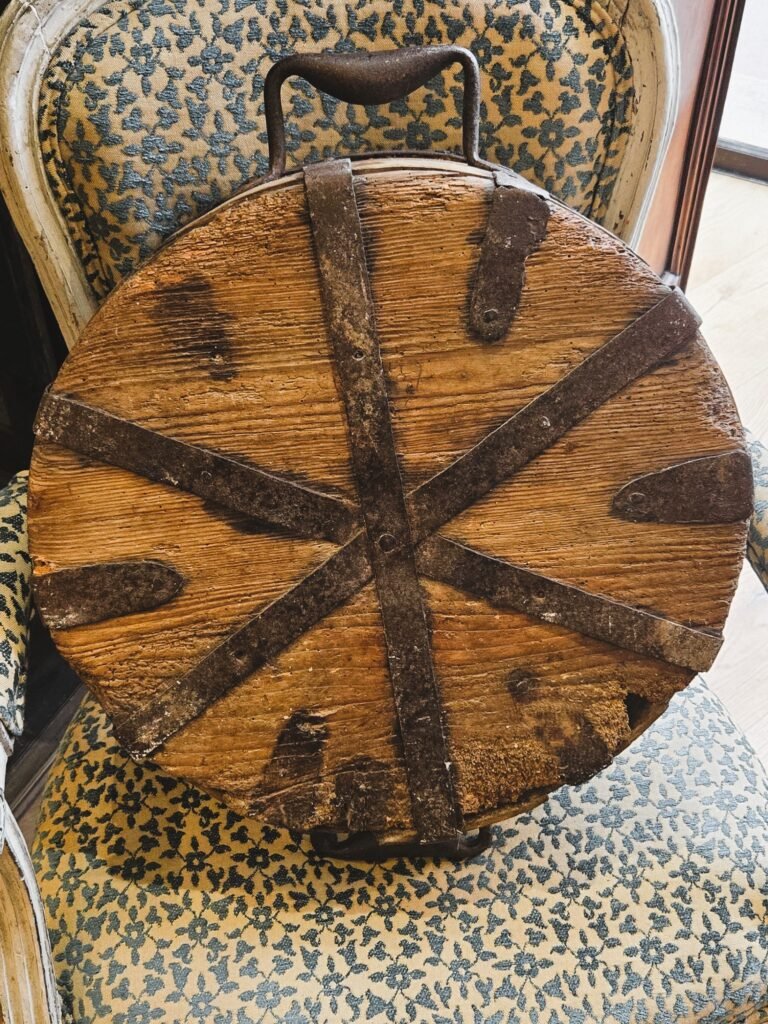
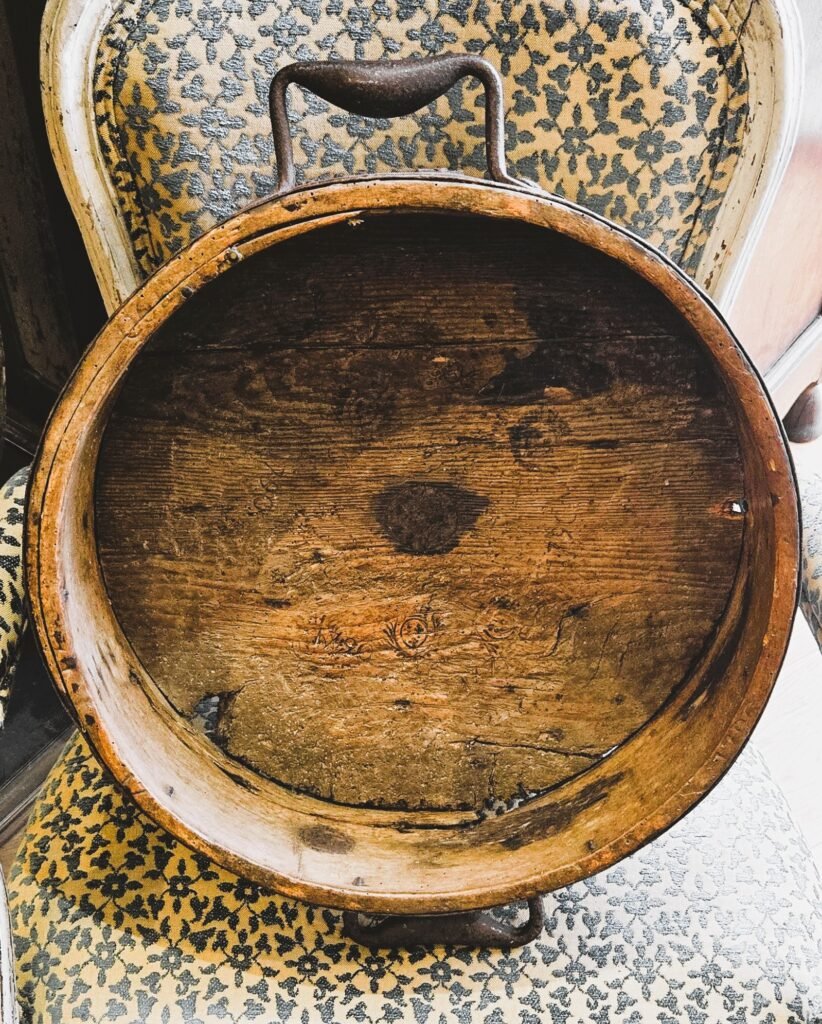
Royal Measure of the Old Regime, Folk Art
- Period: 18th century
- Origin: France
- Dimensions: 42cm diameter
- Price: sold
At that time, before the generalization of the metric system (established in 1795 but slow to become established), each region, or even each lordship, had its own units of measurement.
It is made of wood (probably chestnut reinforced with wrought iron fittings). These iron bands were not only structural: they served to prevent the wood from warping (which would have distorted the measurement) and to prevent the edges from wearing down when "shaving" the grain.
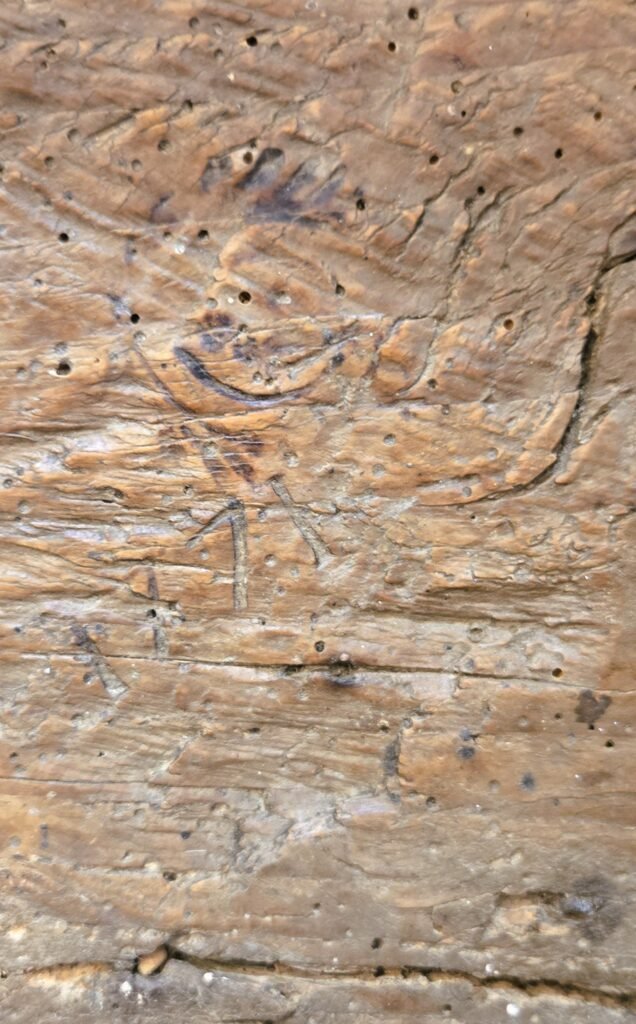
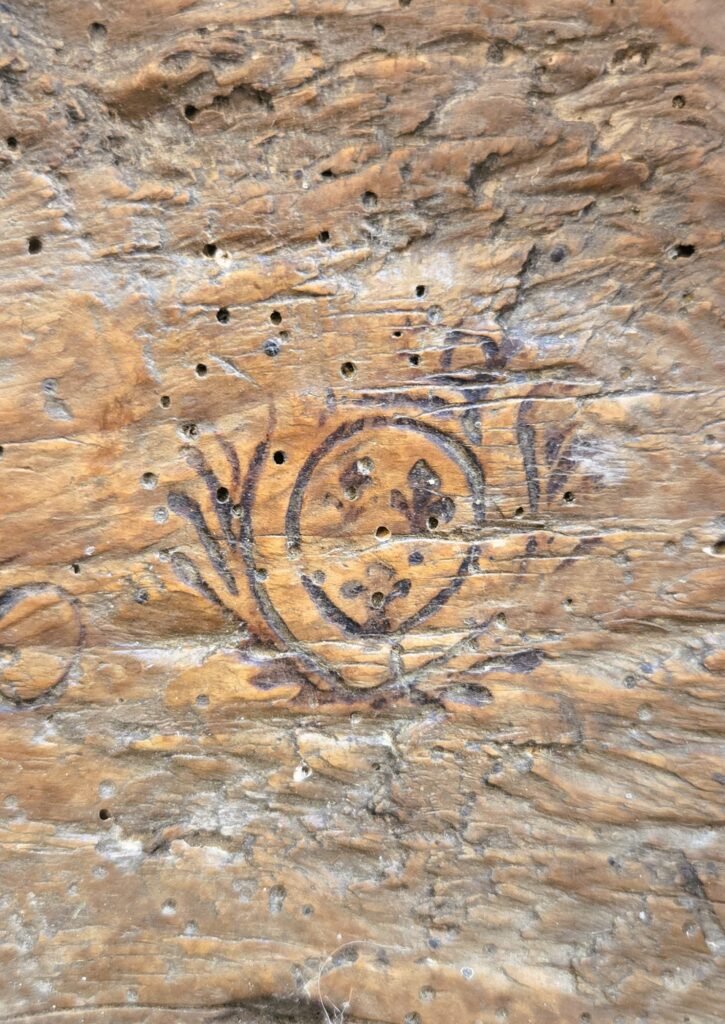
Grain (wheat, oats, barley) was measured in it. The fact that it has sturdy handles indicates that it must have been moved and emptied frequently. The Coat of Arms with Three Fleurs-de-Lys
It is the symbol of the French monarchy. In the context of a measurement, it indicates a royal or "standardized" measure.
Under the Ancien Régime, measurements had to be verified and marked by royal officers. The coat of arms guaranteed buyers and sellers that the volume conformed to the official standard. It was a mark of trust and legality for trade and the collection of taxes (such as the tithe or the sharecropping tax). The Duality of Dates: 1771 and 1790
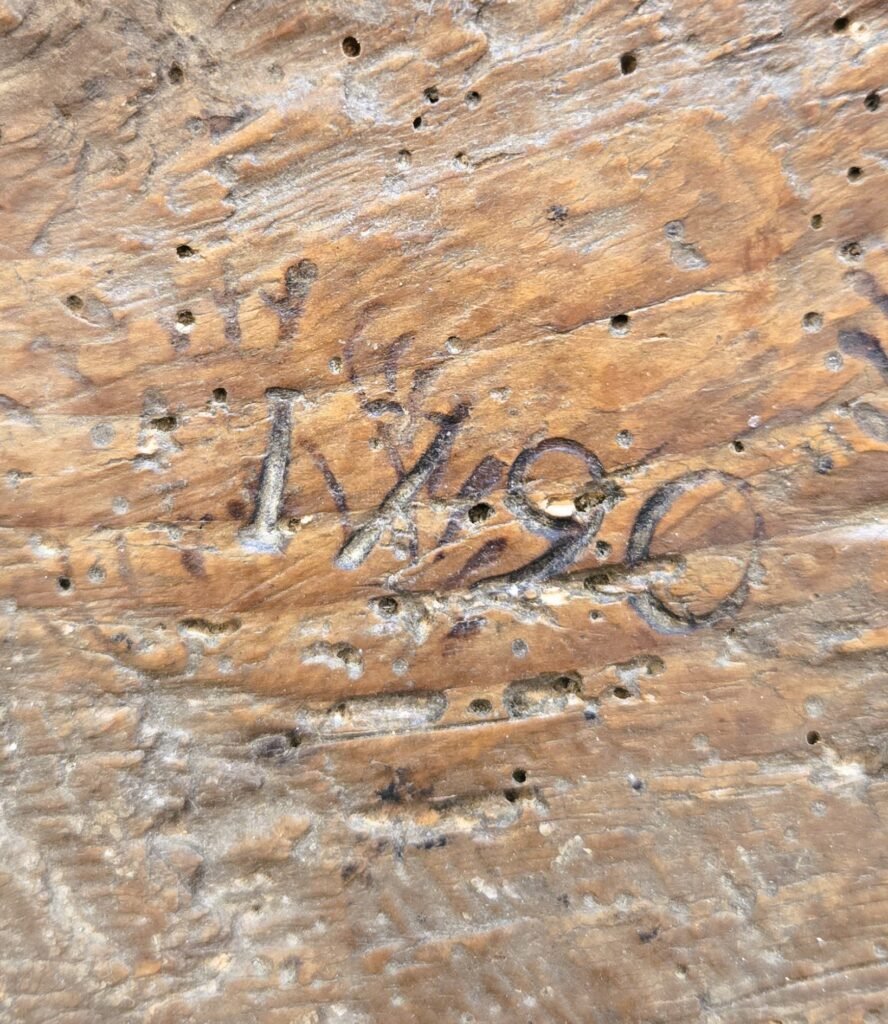
This is where the object tells a political story:
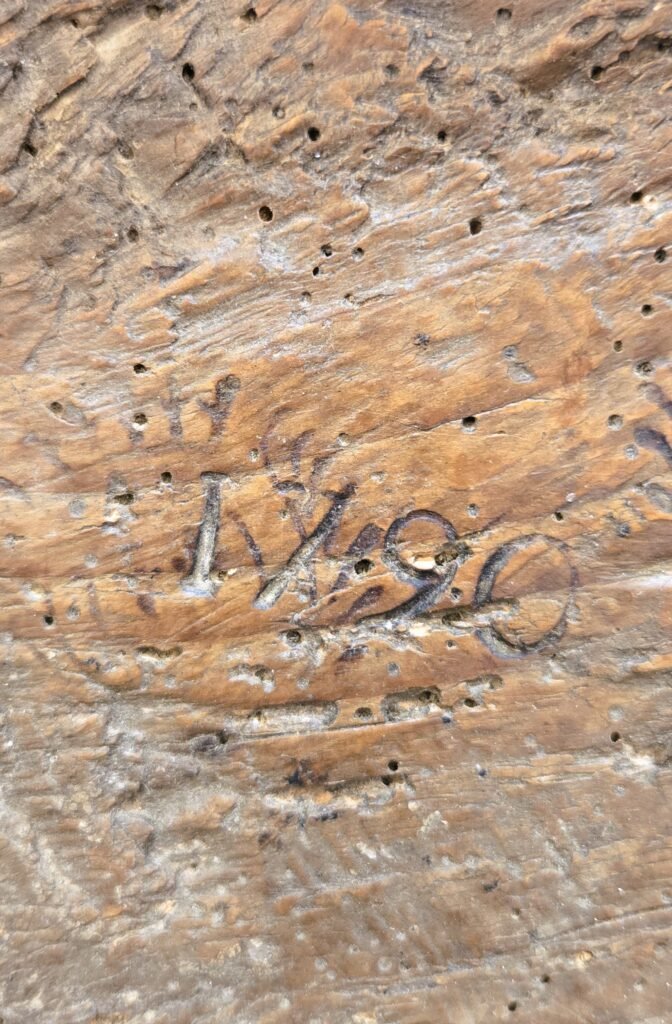
- 1771: This is probably the date of manufacture or first commissioning under the reign of Louis XV. The object was then fully integrated into the feudal and royal system.
- 1790: This date is crucial. We are at the very beginning of the French Revolution. In 1790, France was still a constitutional monarchy (Louis XVI was still king, hence the symbolic retention of the lilies on the object), but the administration changed radically with the creation of the departments.
- Why two dates? It is very likely that the object was re-calibrated or checked in 1790 to confirm its validity in the new revolutionary administrative framework, just before royal symbols began to be systematically hammered or erased (the Reign of Terror from 1792/93)
A rare control device that survived the French Revolution.